For Riders Who Want More!
The United States Pony Club and Interscholastic Equestrian Association, provide young equestrians with exciting opportunities beyond your standard weekly lessons and horse shows. The USPC is primarily an educational organization, while IEA focuses primarily on competitive opportunities. Learn more about both below
PONY CLUB
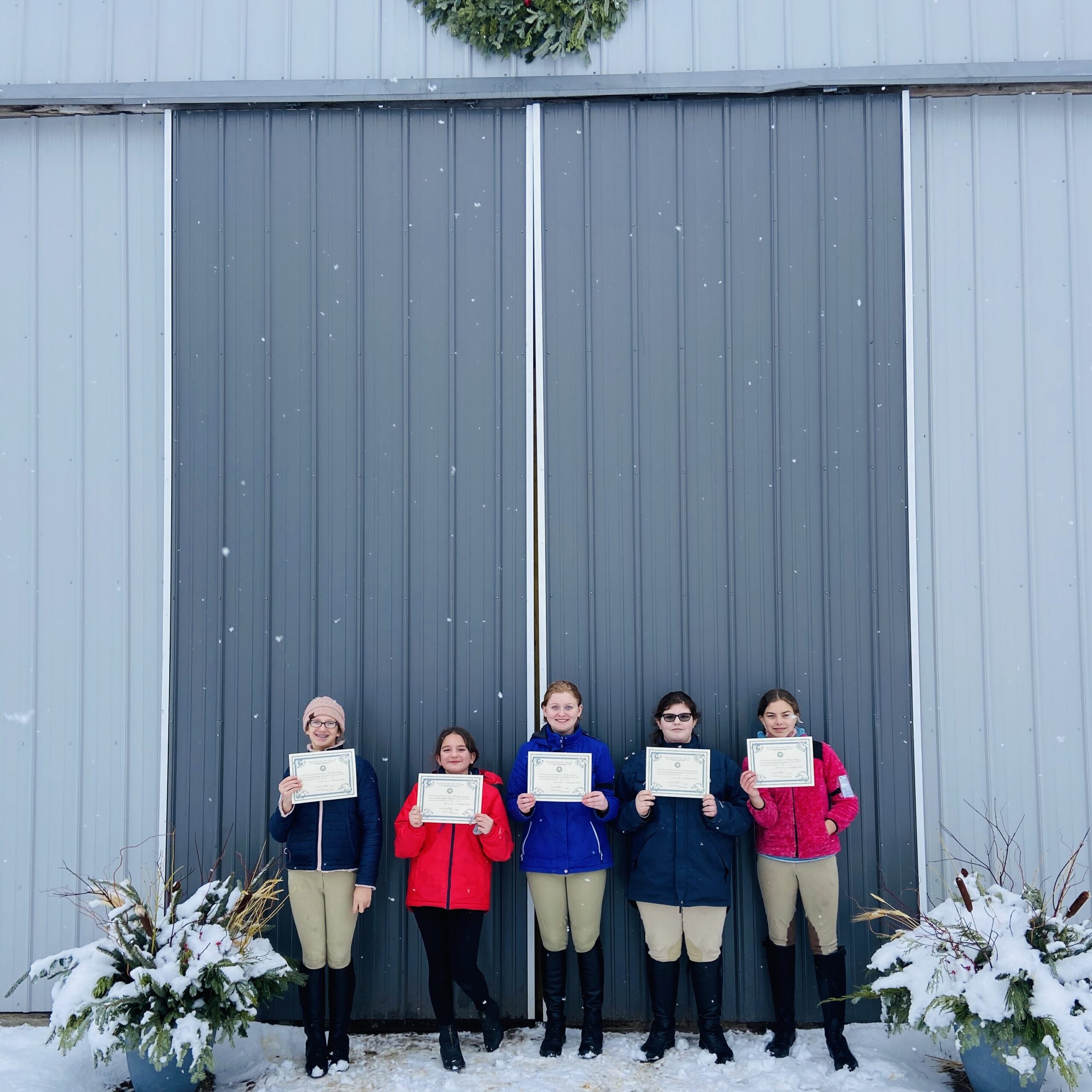
The United States Pony Club is the largest equine educational organization in the world. Riders from around the globe follow the pony club curriculum. Their standards of proficiency are widely recognized as giving riders of all disciplines the background they need to enjoy horses their entire lives. KCS is proud to have been accepted as a USPC Riding Center.
Unmounted Meetings
Unmounted meetings focus on horsemanship. Members follow a sequential curriculum that expands on their knowledge with each certification they achieve. For example a D Level (beginner) Pony Club member would only need to know how to give water, hay, and grain to their horse whereas an A Level (advanced) member would need to know how to identify different types of grains and hay as well as be able to discuss nutritional values. Horsemanship topics include:
feed and nutrition, exercise & conditioning, farm and horse management, equipment, land conservation, veterinary knowledge, conformation & soundness.
Other member Requirements
In addition to our unmounted meetings our members must be riding a minimum of 1 time per week. It can be any kind of riding experience- a trail ride, riding at home, riding with another instructor, or as a part of the KCS riding school. If members are not part of our riding school they will schedule one lesson per month with a KCS instructor, to check progress and work towards their next mounted certification.
Certifications
As members learn and develop at their own pace, they have the opportunity to progress through the Pony Club Standards of Proficiency (SOP), a clear progression of skills in riding and horse management. The levels of certification start at what is called D Level (beginner), progressing to C Level (intermediate) then to B Level and A Level (advanced).
HM Certification- Once a member has passed the certification for the D-1 level (which has a basic riding requirement), as long as they have access to a horse for hands-on care they can continue on through the certification levels without ever riding. The Horse Management certification is based on a practical application of knowledge.
Mounted Certification- May be attained in a variety of disciplines. Riders wishing to complete mounted certifications must also complete the equivalent in horse management.
IEA
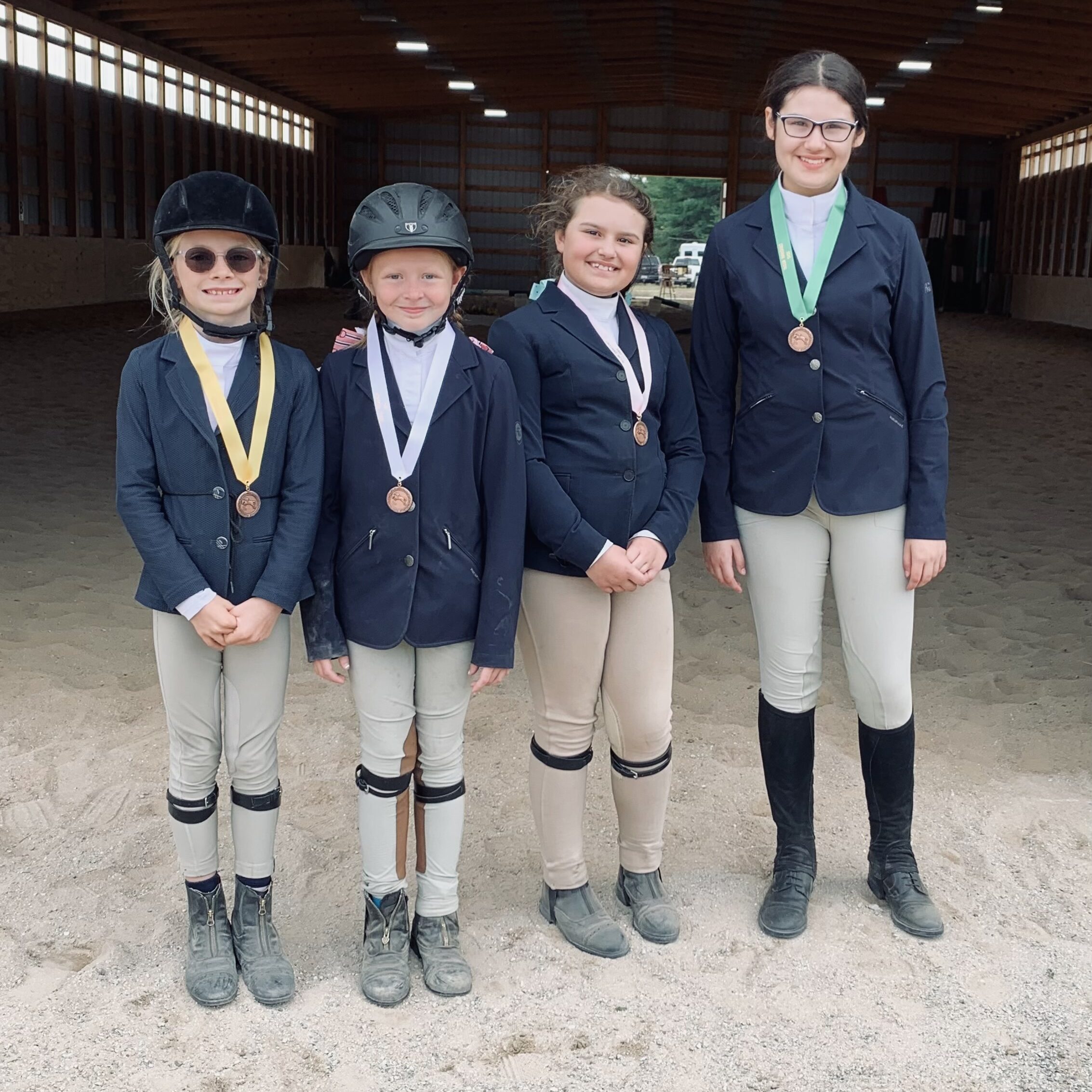
The Interscholastic Equestrian Association is a national program for middle school and high school equestrian athletes. They have a variety of disciplines from hunt seat equitation to dressage and western.
The best part about IEA? no need to own or lease a horse and tack to participate! Everything is provided by the hosting venue. Learn more quick facts below-
- Open to riders in grades 4-12.
- Horse and tack assembled for all competitions by Host Team(s).
- 2 Hunt Seat Classes Offered – Equitation on the Flat and Over Fences.
- 4 Ability Levels for Equitation on the Flat: Beginner, Novice, Intermediate and Open.
- Flat classes may include patterns for upper levels.
- 3 Ability Levels for Over Fences: Novice, Intermediate and Open.
- Over fences classes include cross-rails, 2’ and 2’6” jumps.
- ASTM/SEI Helmets are mandatory for all Hunt Seat riders.
- Zone and National Scholarship Awards available.
- Competition season August 1 – April 30.
ADVENTURE CLUB
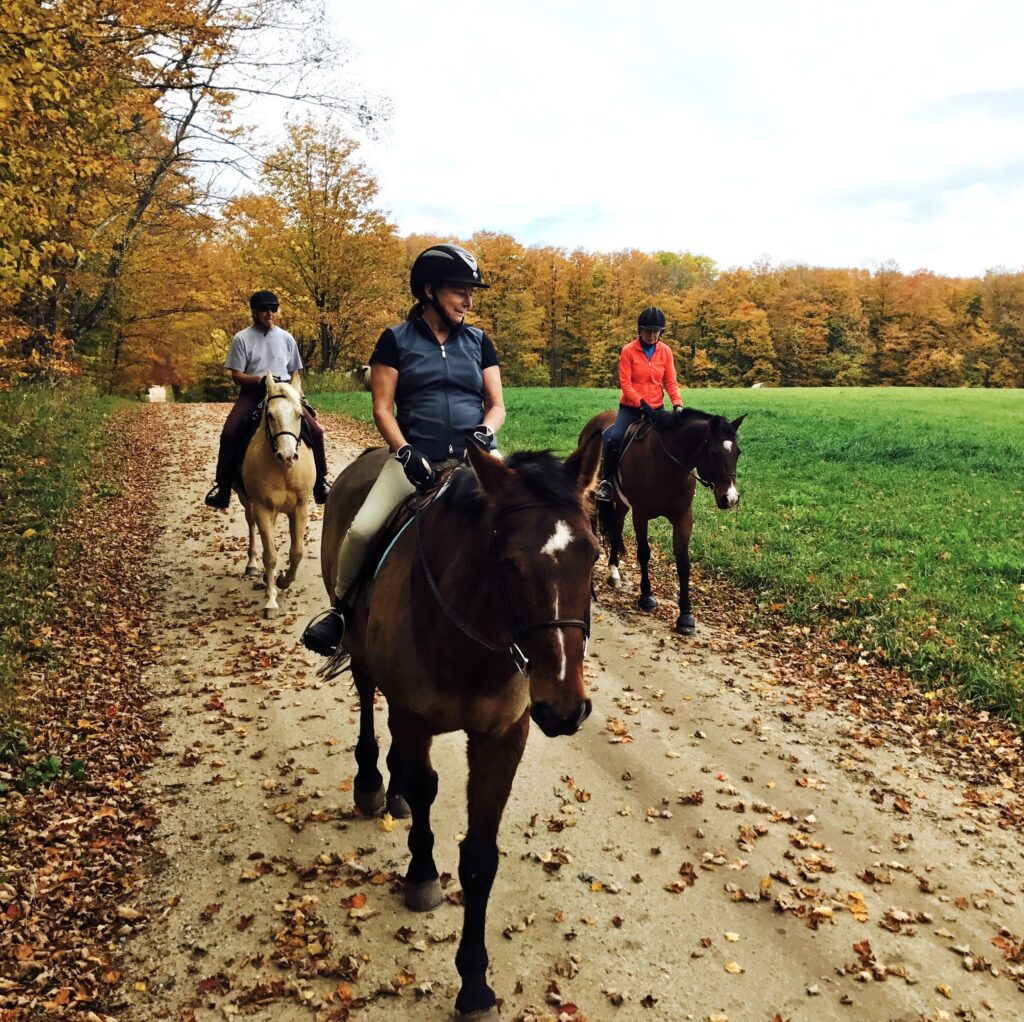
If your horse dreams aren’t confined to the arena, join us for an adventure! 2-3hr guided ride (ride length depends on drive time to starting location) in the beauty of Northern Michigan- Fields, forests, lakes and more! Each ride goes to a different location. Use our horse or yours, limited trailer spots.
Depart at 12PM return to barn 4-4:30PM
*Adventure club is not for beginner riders. We will rider over rough terrain and at the trot and canter when footing is suitable. Riders should have a strong seat in all gaits.*